


When we talk about duty of care in business travel, the focus has long been on destination risk. Are there political tensions? Is the local healthcare system reliable? What’s the weather like, and is it safe to drink the water?
These are all valid concerns. But in recent discussions with clients, we’ve noticed a new layer coming into focus: the individual.
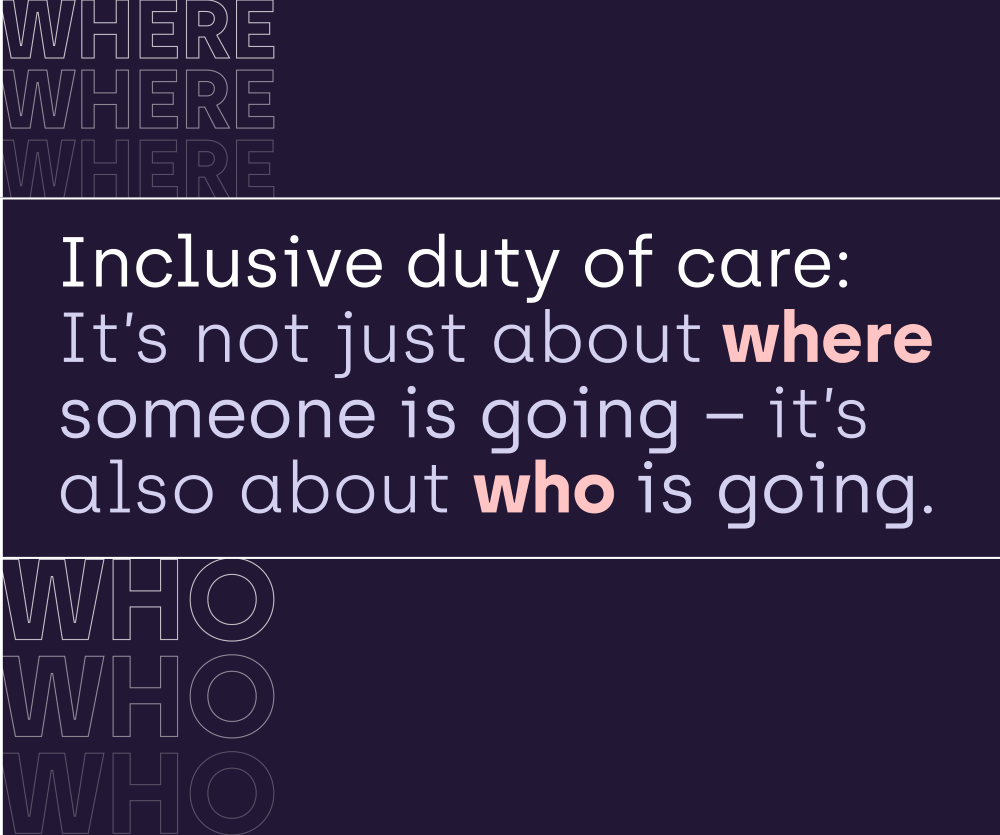
Inclusive duty of care is about acknowledging that safety and wellbeing aren’t the same for every traveller. It’s not just about where someone is going – it’s also about who is going. For Travel Managers, this shift means reassessing traditional policies and asking deeper, more human questions.
Contents:
- Rethinking risk: The case for inclusive duty of care
- Who is travelling? Why individual risk profiles matter
- Creating safer travel experiences through thoughtful planning
- Accommodation’s role in supporting inclusive duty of care
- Putting inclusive duty of care into practice
- Potential difficulties – and how to overcome them
- Conclusion
Rethinking risk: The case for inclusive duty of care
Traditionally, risk assessments have centred on the location. This includes geopolitical stability, natural disasters, emergency services, infrastructure, and more. But this approach assumes that all travellers experience the same level of risk in any given place – and that simply isn’t true.
Inclusive duty of care asks organisations to look at travel safety through a broader lens. It encourages teams to consider the characteristics, needs, and experiences of the individual, alongside external threats. The result is a more thoughtful, person-centred approach to travel safety – one that aligns better with modern values and diverse workforces.
Who is travelling? Why individual risk profiles matter
Every traveller brings their own set of circumstances to the journey, these can dramatically affect how safe and supported they feel.
Here are a few examples:
- LGBTQ+ travellers may face legal or social discrimination in certain countries. Knowing this risk can influence whether a trip is suitable, or whether extra precautions should be taken. A survey of business travellers found that only 13% of companies provided LGBTQ+ specific guidance prior to global travel.
- Women travelling alone might want accommodation with additional security features or more detailed guidance on local areas. 71% of female business travellers believe they are less safe than male travellers according to a recent study.
- Travellers with disabilities need assurance that accessibility isn’t just advertised – it’s actually delivered. A survey of 2,700 people with mobility issues found that 96% of the respondents experienced a problem with their accommodation.
These are not niche cases – they’re increasingly common realities. Understanding them is key to ensuring a truly safe travel experience.
Creating safer travel experiences through thoughtful planning
Inclusive duty of care starts with better conversations. Travel Managers don’t need to have all the answers straight away, but they do need to create space for questions.
Are there any specific concerns about this trip? What would help this individual feel safe and supported? Is there anything about the destination or accommodation that could pose a challenge?
When organisations invite these conversations – and crucially, act on them – travellers are more likely to disclose important details. This leads to more appropriate travel arrangements and a better overall employee experience.
Accommodation’s role in supporting inclusive duty of care
Accommodation is more than just a place to sleep – it’s where the traveller spends much of their time. It has a direct impact on their comfort, routine, and mental wellbeing. Choosing the right property is one of the most practical ways to support inclusive duty of care.
For example:
- A property with step-free access may be essential for someone with mobility issues.
- Secure-entry buildings and 24/7 support can offer peace of mind to solo travellers.
- Well-located accommodation helps reduce the need for travel at night or through unfamiliar areas.
- Properties with kitchens allow travellers to manage dietary needs more easily.
- Calmer environments may suit individuals who are neurodiverse or recovering from illness.
This is where trusted suppliers like Situ can help. With global reach, experienced account managers, and strong local knowledge, Situ can offer tailored property recommendations based on individual traveller needs – helping companies make informed, supportive choices.
Putting inclusive duty of care into practice
This isn’t about rewriting every travel policy overnight. Small, considered steps can make a big difference.
Here are a few starting points:
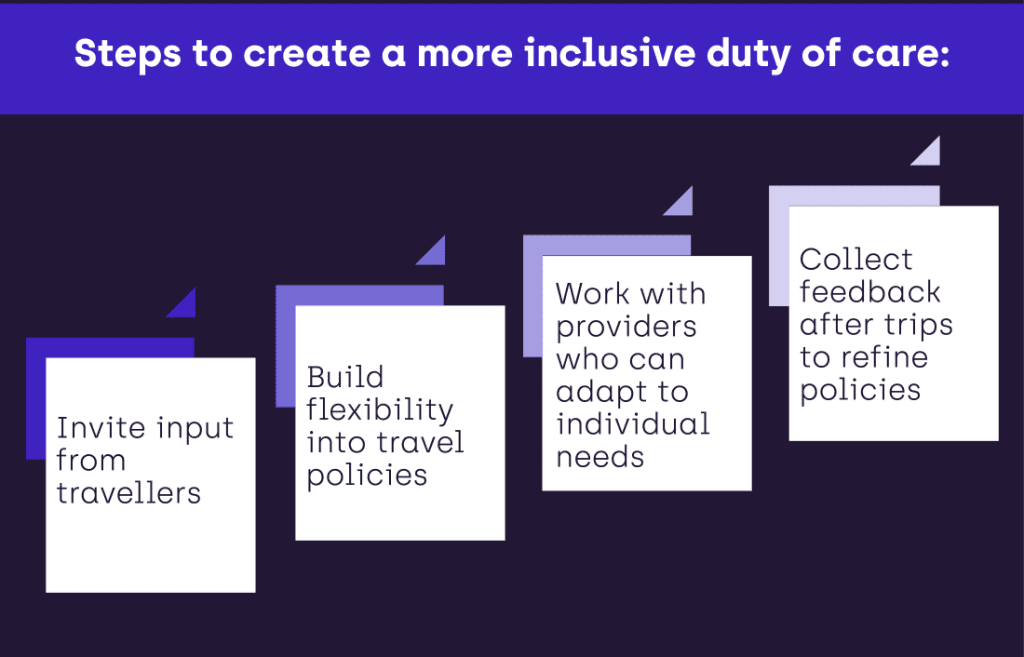
- Invite input. Make it easy for employees to raise concerns or request adjustments, without fear of judgement.
- Build flexibility. One-size-fits-all policies often leave gaps. A more adaptive approach makes inclusive care easier to deliver.
- Partner wisely. Work with accommodation providers and travel partners who can respond to individual needs with sensitivity and speed.
- Gather feedback. After each trip, ask how the traveller felt. Their insights will help shape future policy improvements.
Inclusive duty of care is a journey in itself, but it’s a worthwhile one. It builds trust, boosts wellbeing, and reflects a more human-centred approach to risk management during business travel.
Potential difficulties – and how to overcome them
Of course, putting inclusive duty of care into practice isn’t without its hurdles. Budget constraints, privacy concerns, and the perceived complexity of managing individual needs can all create barriers. But these don’t have to stand in the way of progress.
At first glance, appropriate accommodation might seem expensive, but flexible options do exist. Situ negotiates the best rates with our trusted Partner network, giving clients access to high-quality accommodation at a range of price points. The diversity of our network allows us to recommend properties that align with both individual needs and programme budgets.
Privacy is another key consideration. Employees may be hesitant to disclose personal information, and managers need to handle these conversations sensitively. Establishing clear internal policies – including how data is collected and protected – can help build trust and make it easier for travellers to raise concerns.
For larger organisations, the idea of accommodating multiple preferences across a wide travel programme may feel daunting. But by starting small, building in flexibility, and partnering with suppliers who understand these needs, inclusive duty of care becomes far more manageable.
Ultimately, the cost of inclusive planning is often outweighed by its benefits – fewer incidents, happier travellers, and better retention. It’s not just a moral imperative – it’s a smart business decision.
Conclusion
As travel programmes evolve, so must our definition of safety. Inclusive duty of care moves beyond box-ticking and towards something more meaningful – a recognition that people experience travel in different ways, and that real duty of care considers those differences.
For Travel Managers, this isn’t just a compliance issue. It’s an opportunity to build programmes that reflect the diversity and complexity of today’s workforce.
Situ’s account managers are here to help you build travel and relocation programmes that support safety, wellbeing, and inclusivity. Get in touch to see how we can support you.